
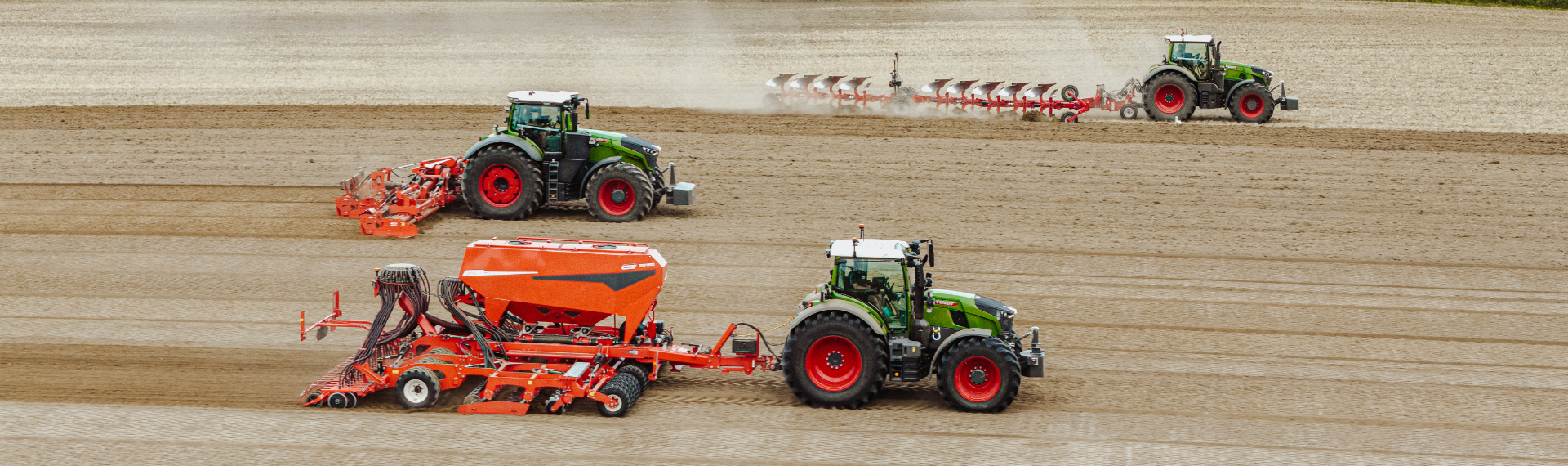
How long does it take to build one of the world’s largest rotary harrows for road use? JP Agrar sought the answer by visiting the MASCHIO GASPARDO factories in Italy and then following the machines out into the field in Germany. The result is a 40-minute documentary dedicated to large-scale agricultural machinery, which explores not only the sheer size of the machines, but above all everything that goes into their design, production and use in real-world working conditions. The star of the story is the JUMBO X, alongside the OPERA 600 and the VOYAGER C80 plough.
JUMBO X: 10 metres of working width for large farms
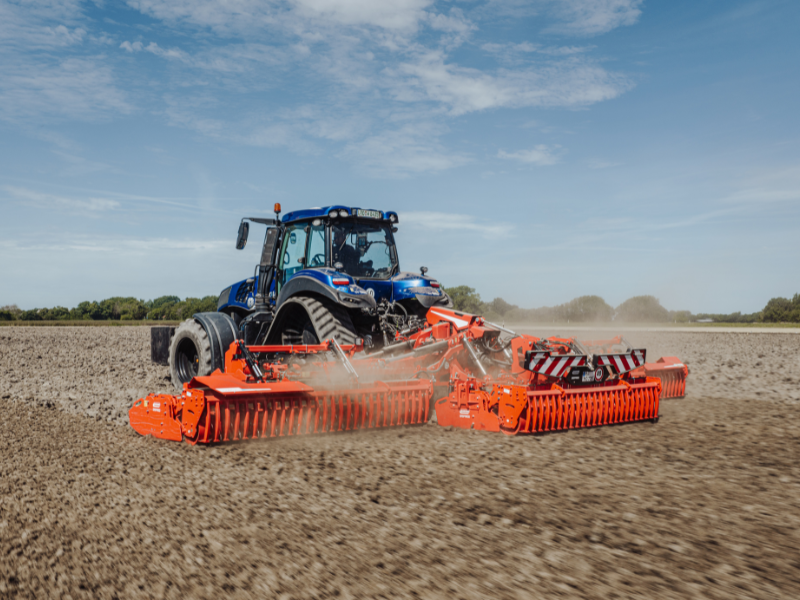
JUMBO X This is a rotary harrow with a working width of 10 metres, designed for large-scale farms and suitable for use with tractors with power outputs of approximately 450 to 650 CV. One of the machine’s most interesting features is its ability to combine a large working width with road transport requirements: JUMBO X folds down to around 3 metres and features an additional axle designed to manage axle loads during transport.
In the field, the machine’s size also translates into equally significant requirements in terms of power and traction. JP Agrar documents the work of JUMBO X on heavy, stony ground, where soil conditions directly affect forward speed: in some situations, a tractor with around 435 CV operates at just 2–3 km/h, whilst higher power ratings offer greater performance reserves. This highlights one of the central themes of the documentary: large-scale mechanisation does not simply mean increasing the size of the machine, but finding the right balance between working width, power, traction, ground conditions and productivity.
The technology on board the JUMBO X
JUMBO X is equipped with 80 tools and typically works to a depth of around 18 cm, reaching 28 cm with specific tine configurations. The machine incorporates features designed to simplify control and management of the work:
- ISOBUS command;
- hydraulic depth adjustment;
- monitoring the temperature of the gearboxes;
- monitoring the rotational speed.
Technologies with a specific aim: to enable the operator to control a large machine with precision and confidence.
The documentary in pictures
Not just the JUMBO X: the OPERA 600 and VOYAGER C80
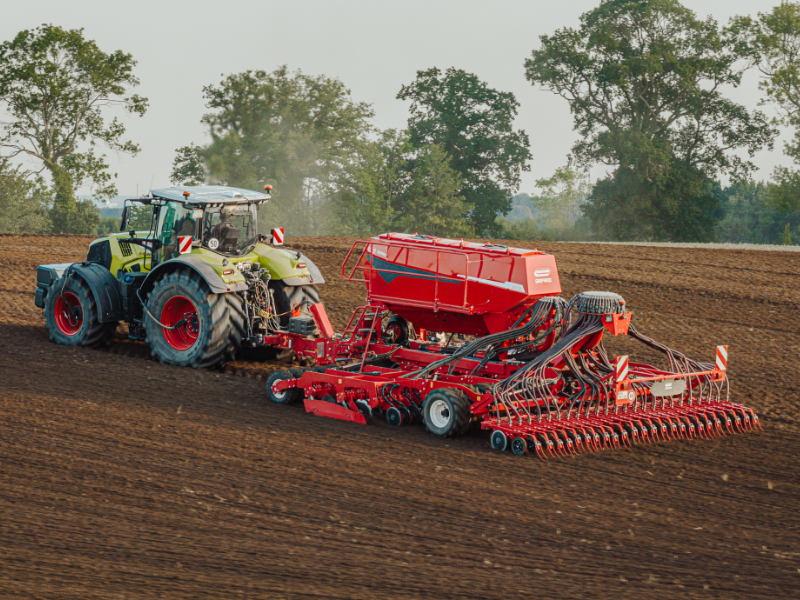
The documentary also presents two further solutions. The OPERA 600, a 6-metre combined seed drill, is used for sowing catch crops: with a hopper capacity of up to 5,000 litres, it is a solution designed for situations where productivity and operational capacity are key factors.
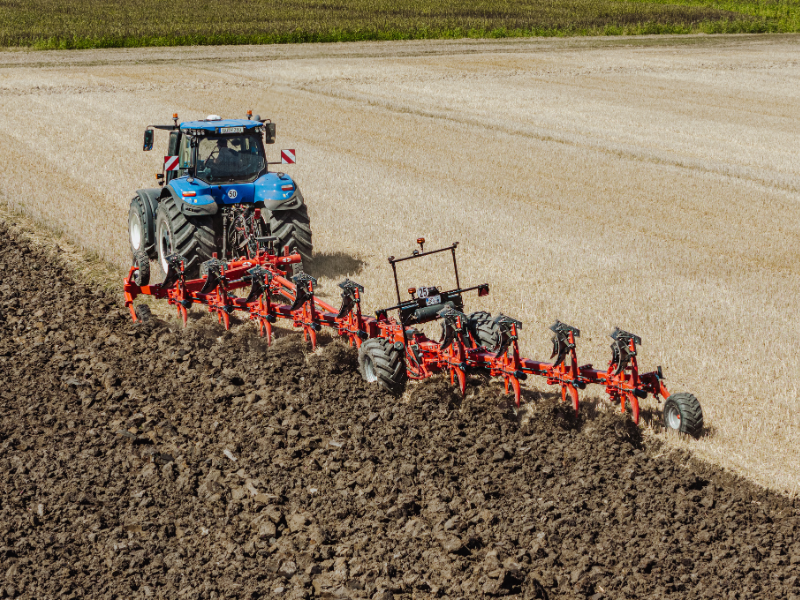
Alongside the MASCHIO GASPARDO technology, JP Agrar is also showcasing the GREGOIRE BESSON VOYAGER C80, an Onland plough available on the German market in configurations ranging from 7 to 12 ploughshares, fitted with hydraulic obstacle protection, a double support wheel for road transport and a rack-and-pinion rotation system that allows for reversal without the typical dead centre found in cylinder-only systems. For MASCHIO GASPARDO, the commercial partnership with GREGOIRE BESSON expands its offering in the plough segment, rounding off the range available to farmers.
From sheet metal to the finished machine: inside the MASCHIO GASPARDO factories
c
The tour offers a glimpse of what normally remains behind the scenes: the people, the industrial processes and the expertise that transform components into agricultural machinery ready for work in the fields. MASCHIO GASPARDO has around 2,000 employees worldwide and an international manufacturing presence, with strong links to the industrial know-how developed in Italy.
When machinery has to adapt to the farm
The second part of the documentary takes JP Agrar directly to German farms. One of the case studies featured is the Kniphagen farm, which has around 520 hectares planted with rapeseed, wheat, winter barley, field beans and silage maize, with a wide variety of soil conditions: ranging from sandy to clayey and heavy soils, in some cases with a high proportion of stones.
Farm buildings are also a factor to be taken into account: the farm is subject to architectural conservation restrictions that prevent buildings and gates from being altered at will. Consequently, the size and specifications of new machinery must also be assessed in the light of internal logistics. A concrete example of a fundamental principle: there is no such thing as an absolutely ideal machine; the solution must work within the specific context of the farm.
Power, productivity and real-world conditions
The tests documented by JP Agrar demonstrate the potential of high-powered combinations. With a 942 CV tractor, a ploughing and soil-tillage combination achieves a speed of around 10 km/h and a productivity of around 4.7 hectares per hour, with an indicative fuel consumption of around 60 litres per hour.
With the JUMBO X, a 1052 CV tractor provides ample power reserves, particularly on lighter soils, where the machine truly demonstrates its full productivity potential. A comparison of different soil conditions highlights a key factor: the productivity of an XXL machine does not depend solely on the working width or the tractor’s power, but on the interaction between the machine, the tractor, the soil, traction, speed and operating conditions.
Watch the full documentary
The value of JP Agrar’s documentary lies in the comprehensiveness of its narrative: it does not merely show large tractors and heavy agricultural machinery, but traces the journey of the machines from industrial production to their actual use, showcasing technology, people, production processes and operating conditions. It offers a practical perspective on large-scale agricultural mechanisation and, at the same time, a glimpse into the world of MASCHIO GASPARDO.